Thursday, November 5, 2009
Accommodation
There is an $8 per night guest house almost opposite Chea Chumneas Hospital in Takmau. However Takmau is a bit out of the way of main Phnom Penh life (and opposite end of town from the Eye Clinc), so some students prefer to stay in town.
.. otherwise.. click on link below
A short synopsis of cheap guesthouses in Phnom Penh (good as of Feb 2009)
Thursday, October 22, 2009
Tuesday, October 20, 2009
Sarah (N.Z.) August 2009
I organised my placement nine months before I was due to start, through Will Grut who was extremely helpful and easy to liase with. I contacted Dr Sarom numerous times via a few different email addresses, but because he is very busy I didn't ever get a reply from him. This was not an issue however, there are usually a few students and he knows to expect them regularly.
I arrived at Chea Chumenas Hospital on my first day and it was easy to locate Dr Sarom using a note with his name written on it and plenty of hand gestures! Unfortunately there had been some miscommunication of some sort which meant there were seven elective students for the first two weeks I was there, far too many for a tiny surgical unit. Thankfully Dr Sarom made arrangements for two girls to go to the paediatric department where they did ward rounds and outpatients and I went to the Rose Charities Eye Clinic, based on the other side of the city, over the Tonle Sap River.
I spent two weeks at the eye clinic, doing clinic in the mornings, where locals drop in to be seen by Dr Vra and his wife Natalia who are the Rose opthalmologists. Firstly we would see the patients from the previous day's surgery, then would see around 150 drop-ins over the morning. Any requiring surgery would get it that afternoon usually. The unit was very small, but everyone was very friendly, and the administration man speaks great english and was very helpful. I was able to watch cataract and pterygium removals and even an upper lid plasty . I think it was actually a friend of Natalia's who paid for her surgery. I saw very advanced pathology and learnt a lot of opthalmology during my two weeks. Unfortunately Dr Vra was not at clinic much and I was mostly with Natalia who was lovely, but not at all confident in her English, so tended to just show me the slit lamp and say a few words. Obviously communication with llocals was difficult, but the Khmer people are so sensationally friendly that I had many "conversations", me speaking English and them speaking Khmer, but we seemed to understand each other! I think one week at the eye clinic would be a good amount of time to see and experience great opthalmology.
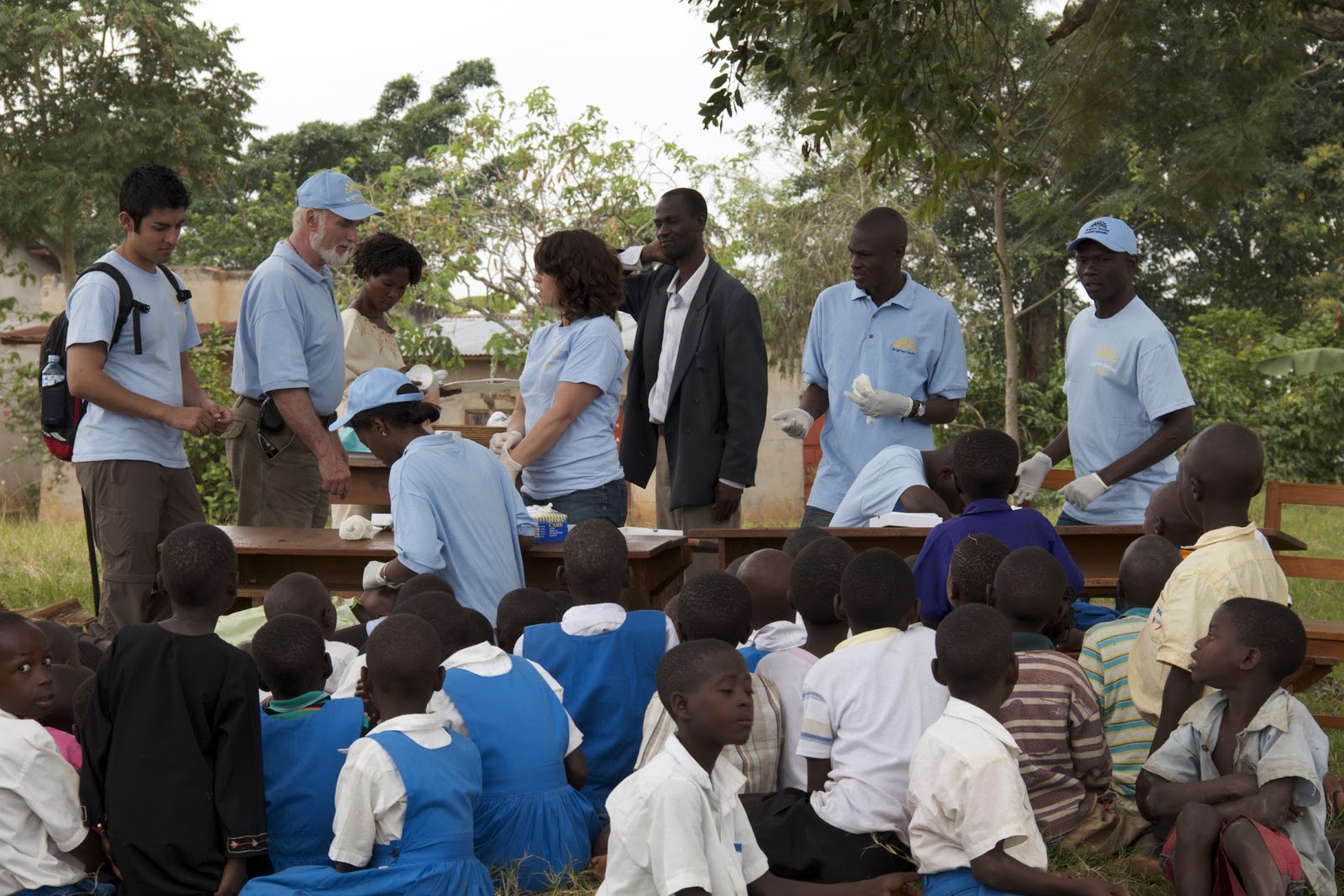
I spent two days with Impact Charity going on outreach clinic trips to places around Phnom Penh. These were great experiences I would highly recommend (Dr Sarom can hook you up). The Impact team are super friendly and loved having me come along.They thought I was much more expereinced in opthalmology than I was, so was set up with a huge group of petients with eye complaints which I tried to deal with, using a translator. Mainly I just reassured those without pathology and decided whether referral was needed in the others. If you were to go on one of these trips, I would try and organise a bit of equipment, as I only took my stethoscope which had a little torch on it, an opthalmoscope would have been handy! I also helped dispense medications on these trips, which was a fun change. These villages were great spot-the-diagnosis places, with heaps of pathology all around.
I spent the second two weeks with the surgical team at Chea Chumenas Hospital, where the pace was so slow that if it had been any slower, time would have been standing still! The team were very relaxed and fun to be with. The anaesthetist was particularly friendly and helpful. I saw thyroid surgery, hernia repairs and appendicectomies mainly. I didn't scrub into any surgeries, which I was happy with as the surgeons seemed a little irractic with their sharps and all keen to get their hands dirty. The thyroid surgery had four people scrubbed and for most of it there were eight hands in or around the incision, all popping in instruments as they saw fit! Unfortunately for me it was a particularly quiet patch while I was there, often I would arrive in the morning to find no electives booked, no acutes arrived and nothing happening at Dr Sarom's private clinic (which he is happy for students to hang out at when surgeries at Chea Chumenas are finished). Also, Operation First weren't operating while I was there either, so I didn't see any cleft lip/palate repairs which I had been looking forward to, but that's just the luck of the draw. I would definitely recommend finding out when the visiting charity Operation Rainbow are visiting and co-ordinating your visit with them, as I have heard that being with them is fantastic. I talked with Dr Sarom about how quiet it was, and he said it was because there is the Pchum Ben Festival which runs for 15 days in September. For a month beforehand everyone is very busy planning for it, so don't get their operations during this time! So I wouldn't recommend coming during August or September. There is also a water festival in November which is similar according to Dr Sarom, so it may be better not to go then either.
I stayed at Okay Guesthouse which had lovely clean rooms and super friendly staff. I negotiated a great room rate (US$10 a night for a double room with hot shower bathroom and cable tv) because I was staying for four weeks. Phaly was a staff member there and he drove me anywhere I wanted on the back of his motorbike, including to and from the hospital everyday. He was easily contactable by phone (he set me up with a SIM card when I arrived). Having a driver was really useful and I felt very safe and trusted him.
Cambodia is a sensational place to do your elective, but not if you're after an action packed placement. After a busy time in ED in Ireland and Saigon, the pace of Rose was perfect for me though! I met a girl who had a great time doing an Obstetrics elective at the national womens hospital, near Wat Phnom, which she highly recommended. There are great opportunities to travel and lovely places to see in Cambodia too, rich in Ancient and recent history.
So, enjoy your time and make the most of the amazing Khmer culture and people - they are truly incredible! I am happy to be contacted regarding an elective in Cambodia, Will Grut has my email details.
Things can be fast or things can be slow. Be warned !!
It is very important to keep the above in mind. The medicine and surgery also is not highly sophisticated. Almost nowhere in Cambodia is this so. The message is really that an elective with Operation FIRST / Rose Charities is best suited for those who are interested in the 'total experience' of Cambodia, not simply to focus on medical / surgical activity. Medical Schools the world over run surprisingly different systems. Some give multiple elective periods over the whole training period, some one big elective almost as a 'reward' for hard work over the years , some ask for very focused electives. You should think carefully about what you want out of your elective. My personal view is illness and human mechanisms for coping with it are deeply integrated into the social fabric of the population, and so to try to isolate the simple procedures of our discipline and focus only on those gives a very stilted viewpoint. The counter argument however is that exams have to be passed and experience in procedures is needed to pass them. Bottom line is that it is your call, but an elective in Cambodia may well not offer what you want, so please think carefully. It is almost as disappointing for us, as it is for you, if you feel let down.
Wednesday, July 22, 2009
Motor accidents are bad in Cambodia !! Be very careful about travelling there...
Car / vehicle crashes are common and are usually bad, especially outside of Phnom Penh and other towns (where traffic makes traveling speeds slower). People drive too fast and nearly always in rickety, badly maintained vehicles which would be banned from the roads in many other countries. Dont get trapped into being in a dangerous driving situation. Tell the driver to slow down, even pay him to do so, and if he does not, then get him to stop the vehicle and find another. Ask around before you go with any particular driver. Overland taxi's overcrowd their vehicles (putting up to 8 or 9 people in small cars). Dont use them !! If you have to, pay for the whole vehicle and insist absolutely that they drive slowly. Crashes at speed will kill you ... !!
Sarah writes..."About 30 mins in we had a bit of a reality check, there was a crowd gathered as we came to an intersection, which almost always means one thing…an accident. We drove past slowly to avoid the crowd and I was just waiting to see something I didn’t want to see...the people involved in the crash. Luckily there was no people there, just the aftermath from the bikes…one was ripped in half, the front wheel completely missing, there was debris everywhere and a fitting reminder of what can happen, especially if not dressed appropriately…a pair of thongs were the only sign of the driver. We all fell silent as we passed and I was glad to be driven by girls that were very careful with their speed, a bit different to the young boys around town.
Tuesday, June 2, 2009
More tips from Jessica.. what to wear etc
I arrive in Phnom Penh in 2 weeks time so I'm very excited.
I wore pants or capris at the hospital, a short-sleeved shirt, and my short-white-coat. It doesn't have to be too dressy though jeans or shorts would be inappropriate.
Do bring your own scrubs as they probably won't have any for you. You can probably wear sandles - many of the Cambodians do - but from a safety perspective, close-toed shoes are always best. You are your own boss in that department. It does get hot no matter what you are wearing!
Monday, May 18, 2009
Jessica writes ... (May 09)
At the eye clinic, there were lots of cataracts, glaucoma, and sometraumatic eye injuries. In Dr. Sarom's clinic, the patients usually hadgeneral complaints - sore stomach, chest pain, trouble breathing fatigue - or they had appendicitis or an orthotrauma that required surgery. Also saw a c-section, a hydrocele repair, and a thyroidsurgery . The rest was cleft-lip and palate surgeries with operationsmile, and one from dr Sarom's clinic.
Somtimes the volume of patients could be quite low. That is why Will and I suggest asking him to help you connect with other departments at the hospital,like pediatrics, or to go to the eye clinic at other times.
In Cambodia, I did travel a bit. The first weekend was a holiday sothere wasn't much at the hospital. I went to Shianoukville (nice, iftouristy beach)/Kampot (small quiet place, not a lot to do but interesting caves nearby)/Kep (nice beach and seafood) to the south.went on my own but met other travellers along the way (on the bus) thatI hung out with a bit. I was lucky that Operation Smile was in PhnomPenh for about 1.5wks while I was there. I got pretty heavily involvedwith their operations and when they took a trip to Siem Reap, I joinedin
Friday, May 15, 2009
Jessica UBC . May 2009
That being said, even very underdeveloped countries do sometimes have quite advanced resources. You'll find that Phnom Penh is a hotbed of NGO activity, as well as other international partnerships. The larger hospitals do have things like CT and probably MRI, although the hospital that Dr. Sarom works at (and his private clinic) I think only have x-ray.
For some of my time in Cambodia, the pace was pretty slow. Dr Sarom let me join his colleagues at the public hospital or in his general practice clinic, so that I could observe the 1 or 2 surgeries that happened each day. If you've scrubbed into the Operating Theatre in your medical school career already, you'll note quite a few interesting differences. As well, what the anesthetists can do without fancy monitors or ventilators is pretty impressive. The surgeries are quite similiar in many ways, but you'll see innovative use and sterilization of what were once considered disposable instruments (having been recycled hundreds of times).
Doctors definitely get creative; my time in Cambodia was quite quite slow at times, but the part that was very busy was the 1.5 weeks where Operation Smile happened to be in town. They were using all western, shiny new equipment and most of the doctors were from the west as well. This wasn't representative of the local style of doing things at all, however we encountered lots of problems when trying to mesh all the imported, Western equipment (and styles) with the existing infrastructure in the Cambodian ORs. My time in Vietnam was far busier, so just because of the volume of patients, I learned a lot more tips about using observation or alternate equipment to achieve the same result as something more complicated, because even though the resources like MRI were availalbe, it was just easier to do it the quick way. Many of these things are similar to what one would learn doing Rural Practice in Canada, so I know they'll be useful in my future.
I stayed in Okay Guesthouse. It's in the Lonely Planet guide. Cheap, backpackery. A single room with A/C and cable TV with hot shower was $12/night. It will be cheaper with two of you.This was about 15 minutes walk from the riverfront area, on a fairly quiet stretch, and quite easy to get a moto, book a bus tour, rent bicycles, and there was a decent restaurant where you can socialize with other travellers.
I also tried the Bright Lotus which was more expensive, not as friendly, but a bit cleaner. It is in the riverfront area, and was about $16/night for a single room. Many of the western-style restaurants are in this area.
- I did not take post-exposure prophylaxis; I would have travelled home if I got a needle stick; that being said, the pace was very very slow. Even though I tell you that, it may be still slower than you think. Typically, I would go to the Dr. Sarom's private clinic in the morning, see a few patients with him [i might examine them, but he would do all the talking in Khmer, and give me a brief rundown of the history in English], watch one surgery at the hospital, and then generally hang around the clinic most of the day; I think asking to do some peds with him is an excellent idea
- as far as rural practice, I think you are right that it will be easier to set up once you are there; Dr. Sarom has lots of contacts and may be able to help facilitate this
- i didn't bring gloves; if you prefer a particular type, you should definitely bring them; surgical gloves are available if you scrub on any procedures, tho they may not have your exact size; in the clinic, I just carried around hand sanitizer, and we would glove only for blood/fluid/etc. contact [i.e. "universal precautions"]. I should say I am comfortable touching patients at home even if they are HIV/HepC positive so long as there are no fluids, etc. Some people always where gloves when they examine people, but as long as you are washing your hands often, I feel like I can do without. If you really like gloves, bring a few boxes! You can usually buy them at drug stores.
- I brought a fair bit of US cash and some traveller's cheques; if you bring traveller's cheques, you can't really use them - you'll have to exchange them at a bank. There are many banks and ATMs are all over Phnom Penh - they dispense US dollars. You'll get small change in the local currency (riels) which is good for negotiating cheaper rides at the market. 1 USD is 4000 riel everywhere. It's sort of a fixed rate that doesn't seem to flux with the global markets. They will laugh if you try to use US coins - I know, I tried it! P.S. only the really upper-scale hotels and shops seem to take VISA.
-don't know how your are planning to get around; tuk tuks from Phnom Penh to Dr. Sarom's place take about 40 minutes and cost 3 to 5 dollars depending on your bargaining skills; a moto would be about 2 dollars. it's worth buying a full helmet (a north-american style full face one is about $15-$20; brands like Index and Apex are pretty good) - on a moto you'll save money, get much faster thru traffic, and save your noggin. Sometimes, I was able to get rides home from the other surgeons and anesthetists, so make friends!
-if you don't have your VISA yet, you might try the e-visa service online. it's pretty easy and allows you to skip the longer lineup at the airport. http://evisa.mfaic.gov.kh/
Comment on the above (from Will) : One comment about speed or slowness of things hapening: It can be very variable. Like Jessica says, when a group is in town things get a lot faster. Operation FIRST/Rose Charities is an organization which, as well as operating locally, focuses on linking specialized groups from overseas who come into the country and share their expertise within the Ministry of Health system (thats very important for he country and often overlooked by some expats.) The next 'group' will be an ear surgery mission in the next month, and following that a teaching group from the Chinese University of Hongkong. When these groups come, the general pace tends to pick up considerably, often to frenetic levels ! The second thing is that the eye clinic (the other side of town) is almost always very busy all day. You can always retrat to it. Doing some paeds and other disciplines is a very good idea. Some of the students who report the best elective experiences did quite a bit
Bottom line, is that its hard to predict exactly what you will do and see. You have to be flexible (just like you were Jessica) and open to opportunities etc. Also though, be clear about commuication. If it seems like no more is going on for the rest of the day, ask if this is the case. Cambodian culture is very poite and you will probably not be told (ie not to offend) if actually there is not much further going on. It can mean you will hang about the rest of the day till you work it out for yourself !
I think, Jessica, you made the point too when we met that in your view the elective is better for those really into seeing how other cultures work and how they intergrate and operate their medical / surgical systems. It does not guarantee steady, regular day by day hands on experience. It can and does happen, but predicatbility is variable. We get students from all over the world and find that actually elective philosophies vary. Some do just one elective, others, electives every year. For these latter ones particularly it may be more appropriate for those 'electiving' in their earlier years, where techniques are newer in the experience spectrum. But then its even hard to say that for, when the specialized teams come (or in the Rose Charities Cambodia Eye surgery unit, where the mics have teaching heads) you may get a lot of hands-on experience.
So think carefully about what you want to get out of your elective.
And please keep on writing back to Rose Charities www.RoseHQ@aol.com so we can keep updating this site.
A very very big thank-you to Jessica, for such wonderful feed-back. I know its going to be read and prove very useful by many !
Friday, March 6, 2009
Thursday, January 22, 2009
Suzanne. University of Cardiff. October 2008
Comment: A great report Suzanne. Many thanks. A good tactic if things get slow at one center is to head up to the RoseCharities Eye Clinic at Kien Khleang. It is the busiest of its type in Cambodia and operations go on almost every afternoon (when other centers can get quiet). There is so much untreated eye disease in developing countries, that any experience that trainee doctors in that area could be of huge benefit in the future.
Thursday, July 17, 2008
Mindy (Wright University, Ohio, USA)
(Mindy did her elective with FIRST-RoseCharities in April 08)
Thursday, July 3, 2008
Katrina (University of Glasgow, UK)
All the best
Katrina
Thursday, March 20, 2008
Jonny (cont.)
Monday, March 3, 2008
Jonny. (UK). 4th March 2008
Just a quick note to say that I've had my first day at Chea Chumnas. Dr Sarom has been very welcoming. I scrubbed in for an operation this morning which was a fantastic experience. I've hooked up with a couple of other med students from London and will also probably be joining one from Australia.
Best wishes,
Jonny
Friday, September 28, 2007
Tom Wolfenden: Brighton & Sussex Med.School UK
I’ve had a brilliant time here in Phnom Penh and especially at Chey Chumnas. Life here is pretty relaxed, but once adjusted really enjoyable, you certainly get more from the experience if you just go with the flow. Initially I was a bit concerned about being on my own out here, but staying in Phnom Penh has allowed me to make so many friends out here. Dr Sarom has been a star, relaxed and easy going and always keen to point you in the direction of another department if you’re not enjoying where you currently are. I’ve spent time in both surgery and paeds now. Despite being really keen on surgery, it is paeds which I enjoyed the most. It’s certainly been a great learning experience. All the doctors on the paeds ward speak good English, which is something that can’t always be said for other departments. Yesterday I ran my own paeds HIV clinic. A pretty daunting task at first, but by the end I was quite happy ordering investigations and writing prescriptions for anti viral drugs (all done through a translator, my Khmer still isn’t quite up to scratch!). All the kids I have met have been amazing, they’re so well behaved.
During my stay in PnP I have been staying at teh Bhoddi Tree guesthouse. It is opposite Tuol Sleng, which is probably the most famous of Pol Pots prisons. Over 17 thousand people were “processed” through there, and indefinitely ended up going out to the killing fields. The actual guesthouse is so charming, it is set back from the road surrounded by a patio garden with large tropical plants sheltering you from the sun. Even if you don’t stay here it is a nice place to go for a quick coffee or a smoothie. The staff here are great, really accommodating and will bend over backwards to help you out (even organising sim cards for mobiles). Prices here can range depending on your budget, you can live it up with air con and an en-suite for around $23 dollars or settle for a fan and shared shower for around $12. The way I worked it out was I got them to do me a deal as I was spending a more prolonged period there compared to the majority of their guests. There are plenty of mottos outside the guesthouse to take you wherever you want and generally they speak fairly good English. Expect to pay around a couple of to get to the hospital in the morning and a dollar back. If you don’t use berrang mottos then you can certainly arrange your fair for cheaper, but they will be a walk around a corner from teh tourist hot spots.
PnP has a really large ex-pat community probably as a result of the number of NGO’s operating out of here. Consequently there are some really great places to go meet people away from the hassles of flower sellers and beggars. If you fancy a bagel and a coffee for lunch why not go check out the Garden Centre (on st57), Java (nr independence monument) or The Shop. All have loyal regular customers and the food is really just what you need if you’re tired of noodles and rice! In the evenings I’ve been eating in a plethora of places, from venders selling noodles on the street, to quite extravagant restaurants and sushi bars. There is a place to cater to everyone’s needs and budgets. Road 63 is a good one to go exploring in search of food, both berrang and Khmer eat here alike.
After super if you’ve had too much chili in your noodles then you would probably want to go and wash it down with a few glasses of Angkor (the local brew). There are loads of ex-pat bars where you don’t get any hassle like you can in Siem Reap or over the boarder in Thailand. I’ve been frequenting Equinox and Rubys wine bar fairly often. Another place to go meet people is Gasolina, there they have regular dance and martial arts classes in the evening. I’ve been going to Capoiera (a brazilian non contact martial art) its something that I would never do back in the UK, but has been really good fun and I’ve met so many friends there. Good bars to watch the sun set are Guesthouse number 9 at lakeside and Snowy’s bar on the other side of the river.
The hospital is pretty relaxed and you can normally take Friday afternoons off. As a result the weekends provide the perfect opportunity to get out of the city and go exploring. If you come to Cambodia you must go to Siem Reap to go the temples at Angkor. There are regular bus and boats, or if you don’t fancy 6 hours in a bus there a regular half hour flights. I bought only a day pass on Friday evening which entitled me entry to the park after about 4ish, which allowed us to go and see the sun set over the temples. We then got up early the next day to watch dawn break over Angkor Wat, if you make the effort it is one of those moments that will stay with you for the rest of your life. There is a real aura about the whole place at this time in the morning. Siem Reap is a rapidly growing town as a result of the numbers of visitors going to see the temples, I stayed at the Merridean purely because it was one of the nearest to the temples, but there are cheaper options in town. The nightlife in Siem Reap is pretty good, and there is a great bar called Angkor What? along a strip of bars and restaurants known to the locals as bar street.
We also have had weekend excursion to Udong, to see yet more temples. After which personally I was a bit templed out. SO the following weekend we went to Kep and stayed on the hill, just below Veranda bungalows. Kep doesn’t really have a beach as such, so we took a short boat ride across to Rabbit Island. It was pretty peaceful and we had the beach to ourselves.
Overall I’ve had such a great time out here, if your prepared to go with the flow and be outgoing you’ll have an amazing time here. If anyone wants to know more about what clinical skills/experiences I think I have gained from this elective please drop me a mail. My address is t.p.j.wolfenden@bsms.ac.uk
Wednesday, September 19, 2007
Tom Univ. Sussex & Brighton (UK) Med School
Saturday, August 4, 2007
Jesal (Univ. Birmingham, UK). Elective May 07
Hi Will,
Sorry about the delay in writing to you - I've started final year now, so everything is a bit hectic! I just wanted to say thank you on behalf of all the girls for helping us to organise the placement with ROSEcharities. It was a great experience for us, we had a terrific time and we learnt a lot!
If you want me to write on the blogsite or anything, I'd love to do that.
Thanks again,
Jesal and group
Monday, May 14, 2007
Jesal. Univ. Birmingham. May 07
Sunday, March 18, 2007
Trudy. Univ.Sydney
blogCambodia Elective Report
Cambodia is a South East Asian country of roughly 15 million people. It is a country that has a legacy of human suffering and devastation. During the 3yr rule of the Khmer Rouge 30% of the population was slaughtered in a horrific ‘auto-genocide’ and many more died in the following years due to disease and malnutrition. Once an Asian centre for Medicine, after the Khmer Rouge regime the numbers of doctors fell to less than 50. Cambodia has since made much progress - they have achieved peace and had a sustained economic growth. The percentage of the population living below the national poverty line has fallen to 35%. However, in a setting of poverty, sex work, overcrowding, lack of infrastructure and lack of health funding, Cambodia’s health situation is poor. Communicable diseases, especially TB, HIV, STIs and malaria, dominate all age groups accounting for 83 per cent of all disease burden. About 11% of the population is below the minimum level of dietary energy consumption. Nearly half of all Cambodian children are malnourished, and one in eight dies before their fifth birthday, largely due to preventable causes.
Spending our time in the city of Phnom Penh we weren’t made as aware of these statistics however we did see a lot of patients suffering from the consequences of TB, HIV, malaria and leprosy infections. Hopefully this will begin to change as the healthcare for Cambodian people becomes a priority on a national and international stage.
One thing that struck Courtney and I was the huge number of hospitals and medical and public health clinics both in Phnom Penh and in rural areas. While their condition and service availability might be less than adequate and, granted, the clinics never looked to be open, signs of healthcare are certainly always visible. There are also plenty of billboards explaining normal paediatric milestones, promoting safe sex and raising awareness about malaria and bird flu.
We spent our first two weeks at Kien Khleang Rehabilitation Centre Ophthalmology Clinic which is in the north of the city. It is assisted by Rose Charities New Zealand. There is only one ophthalmologist on staff, Dr Hang Vra, and every morning he sees approximately forty patients. He is assisted by a very capable team of people including several local medical students who spend their weekdays working there and then go to university on weekends. We spent mornings in clinic with Dr Vra who constantly tried hard to include us. The hospital/clinic is small, especially to contain the huge numbers of patients, but comfortable. Patients seem to come enmasse, maintain some system of order and struggle through a series of steps that take them inside and outside seeing different people. They start on the verandah where their visual acuity is tested and written on a small square of paper. Next they wait to see Dr Vra. Generally the door to the clinic was full of people trying to see what was going on inside. After that they have their intraocular pressure checked on the other side of the room, wait outside for their dilating eyedrops to work, push their way back in for another check with Dr Vra and then see the pharmacist to get their medications. At times there were several people fighting for the one chair, but generally they seemed to have an understanding of some kind of order. We saw a good range of eye diseases and Dr Vra would let us use the slit lamp and the ophthalmoscope. The main condition by far was cataracts, but there were also many cases of corneal scarring, glaucoma, fungal and bacterial conjunctivitis, pterygiums and retinal diseases such as retinitis pigmentosa in quite young adults. Many patients would include us in their consultation, turning to us and launching into a lengthy story in Khmer, to which we’d just smile nicely and nod. Dr Vra’s most commonly used phrase was “they’ve come too late, that eye is gone already”. Most patients seemed to accept blindness as part of their life. For many however Dr Vra had the joy of being able to restore their sight or prevent its further loss. In a noisy, stressful and often tedious environment he seemed to take constant satisfaction from this. He often remarked that the other eye clinic just next door didn’t do good quality surgery and quite a few people turned up to see him with an eye that couldn’t be saved due to botched surgery. We found it sad that this can become so widely known, even by word of mouth in the general public, and yet the place is still allowed to run.
Lunch consisted of us going to a small local place with the Optometrist and one of the med students or struggling through interesting food shopping experiences with the small shop owners who spoke no English and didn’t seem to have the ability to get their message across any other way.
After lunch we would join Dr Vra in surgery. While we weren’t able to get involved we could look through the microscope and watch the surgery or watch the anaesthetist prepare the next patient. We became quite knowledgeable of the procedures involved in a cataract operation or a trabeculectomy for glaucoma. Probably the most exciting surgery we saw was an evisceration of an eye which involved cutting out the iris and then scooping out the lens, vitreous humour, retina and choroid. We became used to those little unique differences in surgery such as wearing thongs and washing gloves with saline between patients instead of changing them.
The rest of our time was spent at Chey Chumneas General Hospital in Takhmao which is about 20mins to the south of the city. The hospital consisted of several buildings spread out over quite a large site. The grounds were dusty and quiet and it often seemed like nothing was happening. The general surgery block was always crowded of a morning with the patients and their extended families. Our main contact there was Dr Nous Sarom who is a maxillofacial/reconstructive surgeon and works for FIRST - Rose Charities Canada. He was very friendly and helped us organise a simple timetable for our stay before introducing us in each section. This made things much easier since they all knew to expect us. He also gave us keys to his office which was a nice spot to keep our valuables and go for a cup of coffee. FIRST have their own building and operating theatre and you could definitely see the benefit the international funding has had. We saw some really interesting post-reconstructive surgery patients of Dr Sarom’s on the first day there but after that he had no surgery scheduled. It was harvest time in Cambodia so families don’t book in for elective surgery. We were looking forward to seeing cleft palate surgery so it was a bit disappointing and if you were choosing this as a surgical elective then this definitely isn’t the time of year to go. Instead we divided our time between the Children’s Mental Health Centre, the Children’s HIV clinic and General Surgery.
The Children’s Mental Health Centre was a really well run service and consisted of a very friendly, multidisciplinary team of people who all spoke very good English. We were able to sit in on the early development assessment clinics and assess and play with babies and small children who had a variety of neurodevelopmental delays. Most of these children had a past history of tuberculous meningitis. Every Tuesday they have an educational day for special needs children since there are no schools that offer this and we joined in on one of these. It was interesting to see that it was these children who accepted us more openly and naturally than at any other people during our trip. On Thursdays villagers from a rural province are brought in for their children to see the doctors. We were able to sit in on the consultations with the children and their parents. The children had a range of disorders but most common were epilepsy, mental retardation and personality disorders. In some cases we were shocked by how many difficulties of various kinds the mothers or grandmothers live with every day.
The paediatric HIV clinic was another good experience. The mothers were all very keen for us to play with their children and quite often a woman would lead her children to us so we could talk and play with them. This was harder than it sounds since we didn’t speak their language but the children seemed to like us. Almost all the children there were infected with HIV from their mothers during birth. We found it strange that the children all presented with varying degrees of skin infections, respiratory infections and malnutrition while their mothers all looked perfectly healthy. Generally the children were happy and relatively well despite having TH4 counts of around 1%. Most were there for a checkup and review of their antiviral medications. Occasionally a child would look quite skinny and unwell and we found it quite sad to see this. The life expectancy of most of the children would be approximately 18yrs. One little girl had been an inpatient for a month due to severe diarrhoea and malnutrition and she was still the skinniest, tiniest 4yr old I’ve ever seen. Several doctors working at the clinic spoke good English and were really keen to tell us everything despite it slowing them down so much that they’d only get through 2-3 patients in a morning!
It was quite a trip each day from Phnom Penh to Takhmao so for 1 week we stayed at the comfortable guesthouse across the road. On most days there wasn’t much to do after about 2pm so it was good to have our room so close. However it is a part of town where tourists aren’t common and we found the stares, limited restaurant options and lack of spoken English quite difficult. We would recommend staying in town and travelling out each day.
In all we had a great time. The medicine wasn’t very hands on and I suppose you could say that the learning opportunities for serious medicine were limited however we definitely gained an insight into the lives of the Cambodian people and got to see a little of the hardships they face in accessing and financing adequate healthcare. As to the standard of healthcare, because all our time was spent in charity assisted clinics we found it to be excellent. I suppose in the government hospitals and clinics it may be a little more sub-standard. We also overlapped with some other med students from NZ and enjoyed spending some time with them. I would never knock back an opportunity like this, to spend a month getting to know and understand a complex city like Phnom Penh.
Some points for future students:
* Don’t expect it to be a completely surgical elective if you go Jan-Feb
* Take your own scrubs
* Short sleeves are good because it’s oppressively hot but dress modestly.
* Mosquitoes aren’t as much of a problem as guidebooks say they are (at least not at this time of the year)
* Even as 2 females, we felt safer than we usually do in Sydney. We never had a problem.
* Contrary to some info, there are now ATMs in Phnom Penh. They dispense USD and are very reliable. Bring money in small denominations ($1, $5) and expect to deal in a mixture of riel and USD.
* The food is really nice, there are countless little family-run restaurants to eat at and they’re safe and cheap.
* Tuktuks are great transport for 2 ppl, just agree on a price first. Drivers will often arrange to come back for you in the afternoon.
* Get the 3 day pass for the Angkor temples, start early and take your time
* Visit Capitol Guesthouse for ideas for weekends
* Eat, stay or both at the Boddhi Tree opp Tuol Sleng Museum for a week, it’s really lovely.
* Internet is very available and cheap.
* All guesthouses supply linen and towels.
* Learn some Khmer - I found numbers and ‘no thankyou’ to be the most useful
* Remember to bargain, it becomes a lot easier once you get used to what things should cost.
* Have a chat to some of the kids that are selling things - they can be annoying but they’re still kids and some love an interesting talk and their English is almost the best you’ll find.
* Phnom Penh grows on you, it really does!!! There’s something really nice about it, just give it some time.
Thursday, February 8, 2007
Evan and family - Visiting Cambodia from Canada
ET Dorward family We are back in Phnom Penh again this time on our way to Kampot in the south.
While preparing for this trip it was apparent there was a great need here. Cambodia is a country only just beginning to emerge from the ravages of war. American bombing in the 60s, civil war, genocide, and more civil war pretty well sums up the previous 40 years. We have been witness to a building boom here, much of it being generated for and from the tourism industry. However once the hotels are built then what? Not everyone can drive tuktuk or clean hotel rooms. As usual in the third world a select few seem to benefit. In today’s paper the garment industry just announced a minimum wage increase from $40 to $45 per month and they are the lucky ones. For the vast majority of Cambodians a brush with the tourist dollar or a factory job is the stuff of dreams. So to for many is basic healthcare. Imagine not knowing what your grandchildren look like because of blinding cataracts or suffering day after day unable to function because of untreated and improperly healed wounds or burns.
Today we took a day to visit with Cambodians working to help the disadvantaged here with these needs. Before coming to Cambodia we made a donation to Rose Charities Kien Khleang sight restoration centre and Operation FIRST Cambodia
Our first stop was the Kien Khleang centre. There we met briefly with Dr. Hang Vra. His morning is spent examining patients and today was no different, in the afternoon he does the eye surgeries. Taking him away from his work for a handshake and a hello was enough. Many of his patients come long distances at great inconvenience and expense to see him and who would want to do that then have some tourist show up to visit with the Doctor. Instead his assistant showed us around the facility and introduced us to some patients. I don’t have the words to begin to explain the need here, of course equipment is high on the list and the patient recovery areas are very basic. $25 pays for a sight restorative eye surgery.
Our next stop was to visit Dr. Nous Sarom with FIRST Rose rehabilitation surgeries at the Chey Chumnas Hospital. The Operation FIRST Cambodia facility is newly built and offers corrective surgery for tumors, burns, wounds and congenital defects such as cleft palate. Dr. Sarom had just returned from a plastic surgery conference in Vietnam and so there were no patients there today. Tomorrow morning he has three surgeries, a cleft palate, a foot skin graft and a burnt hand thats healed shut. He has need for a modern suction device, operating table and separate toilet for patients. $50 covers the cost for one complete surgery.
Unlike the NGOs who’s brand new SUVs we observed parked outside expensive downtown riverside restaurants, both these charities have little overhead, donations go right to the Cambodians in need being helped by Cambodians. We encourage anyone reading this to consider making a donation to Rose Charities with the knowledge your donation is helping those that need the help.
Tuesday, January 23, 2007
Trudy (Univ. Sydney)
Wednesday, January 10, 2007
Luke. Univ.Adelaide
Hi Will,
I have finished my elective and left Cambodia already (im in vietnam). The elective was great and Dr Sarom seemed happy with us, especially with the accounting and patient record systems anne set up.
We had a great time in Cambodia, did a lot of travel too. We are now working our way up the coast of vietnam.
thanks for helping me sort out the elective, and if you ever want me to get in touch with other students or write something for you id be happy to
thanks again
Luke
Friday, January 5, 2007
Malcom. Univ. Oxford UK
.....Dr Sarom, the ROSE surgeon, taught and performed surgical procedures in the basic, but adequate, operating theatre. We would often have to be the scrub nurse and assist at the same time; as time went on we were able to help more and more. After we had seen and assisted at several of the cleft lip operations, Dr Sarom declared, "Next time you be surgeon!" Dr Sarom supervised me closely as I operated, his stepwise teaching paid off and the results were impressive. The buzz from completing my first operation was heightened when the little girl thanked me a week later. "Now I am pretty," she said.
I became familiar with the tropical diseases that I had previously heard about only in lecture theatres. Though the medical ward was an incredible learning environment, with late stage everything and full of florid clinical signs, it was hard not to get frustrated by the lack of resources. The country ran out of insulin during our stay, the strongest analgesic available was pentazocine, and the availability of x ray equipment was a luxury. The variation in the training of the medical staff was more difficult to cope with. The concept of ensuring the airway and protecting the cervical spine after trauma was alien to most doctors, and it was unsettling to see patients' lives put at risk from such simple oversights.
We went on several outreach visits to regional hospitals. In an Italian run emergency hospital near the Thai border, I gained first hand experience of the horror of landmine injuries. A demining truck had driven over an antitank mine after being told that the route was clear of mines. We treated the two passengers, one whose spleen had shattered, the other with several broken bones. The driver had been killed instantly. The wards of these rural hospitals were full of the limbless......
Debbie. Univ. Brisbane. Australia
Cambodia is a
beautiful country. During a trip out into the one of the villages with
Dr Sarom I had the chance to see some most amazing sights... nothing
likie anything I would ever encounter back home.
I've also had the chance to see some of the sadder sights of the
country, including many amputee cambodians. A constant reminder of the
tragic history of the nation
There are many differences between the medical procedures here and
those I have observed back in Brisbane. It is interesting to see the
application of limited resources in very ingenious ways.
I am very much looking forward to the Operation Rainbow Mission. I
believe I will get to see a lot, and have an enormous potential to
learn...